


COMMENTS We are on the cusp to realize the smart city revolution. The advances in technology have made a significant impact in deploying smart cit
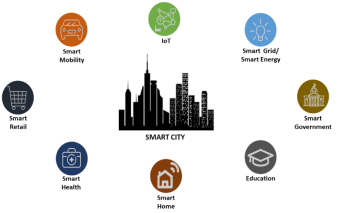
We are on the cusp to realize the smart city revolution. The advances in technology have made a significant impact in deploying smart city applications and services to improve the performance of health, intelligent transportation, education, energy to offer higher levels of comfort to the citizens.
According to UN DESA, it is projected that the world’s population living in urban areas is expected to increase by 68% by 2050 from 55% currently. Under India’s Smart City Mission, over 100 cities are focused on developing under the smart city principle, and over 5000 projects worth $30 bn were discovered, in which 1809 projects worth $4 bn has been completed.
We are on the cusp to realize the smart city revolution. The advances in technology have made a significant impact in deploying smart city applications and services to improve the performance of health, intelligent transportation, education, energy to offer higher levels of comfort to the citizens.
According to UN DESA, it is projected that the world’s population living in urban areas is expected to increase by 68% by 2050 from 55% currently. Under India’s Smart City Mission, over 100 cities are focused on developing under the smart city principle, and over 5000 projects worth $30 bn were discovered, in which 1809 projects worth $4 bn has been completed.
Recent years have disclosed a remarkable escalation of compute-intensive platforms for smart city applications. These applications generate enormous amounts of data that demand low latency processing capabilities.
One way to address this challenge is through the use of dedicated hardware with adequate computing and storage capacity. Which introduced cloud computing, providing on-demand storage and processing capabilities cost-effectively. However, cloud computing constitutes limitations on its use in real-time while on the other hand, edge computing brings the power of the cloud to the edge of the network, gaining insights on the edge before sending it to the centralized server for further analysis. Hence, edge computing presents to be a viable solution for smart environments
Benefits of Edge computing
- Reducing latency: Bringing computing at the edge of the network rather than uploading data to the centralized server or the cloud, reduces latency
- Improve security and privacy: When all the data eventually is analyzed locally, the need to send vulnerable data to the public cloud reduces
- Reduce expenses: As vast amounts of data are generated, bandwidth and storage cost increases. Using edge computing and local data processing the amount of data to be sent to the cloud reduces.
- Scalability: Edge computing allows companies to expand their computing capacity through IoT devices and edge data centers.
- Versatile platform: The scalability of edge computing also makes it highly versatile, by partnering with local edge data centers, companies can easily target diverse markets without the need to invest in expensive infrastructure expansion
Edge AI hardware for Smart Cities
To meet the requirement of intelligent devices which can process vast amounts of data on the edge in real-time lead to the rise of edge AI hardware platforms.
Smart cities need special hardware that can deploy edge AI computing in diverse environments. iWave Systems introduced Corazon AI an edge AI platform built on a highly adaptive Zynq Ultrascale+ MPSoC device and integrate Vitis AI stack to unleash the full potential of AI on FPGAs. Vitis AI consists of optimized tools, IP cores, libraries, models, and example designs to develop deep learning inference applications with ease. It includes advanced pre-optimized deep learning models from the mainstream frameworks such as Tensor-flow, Caffe, Darknet, Keras, and Computer Vision Libraries.

COMMENTS