


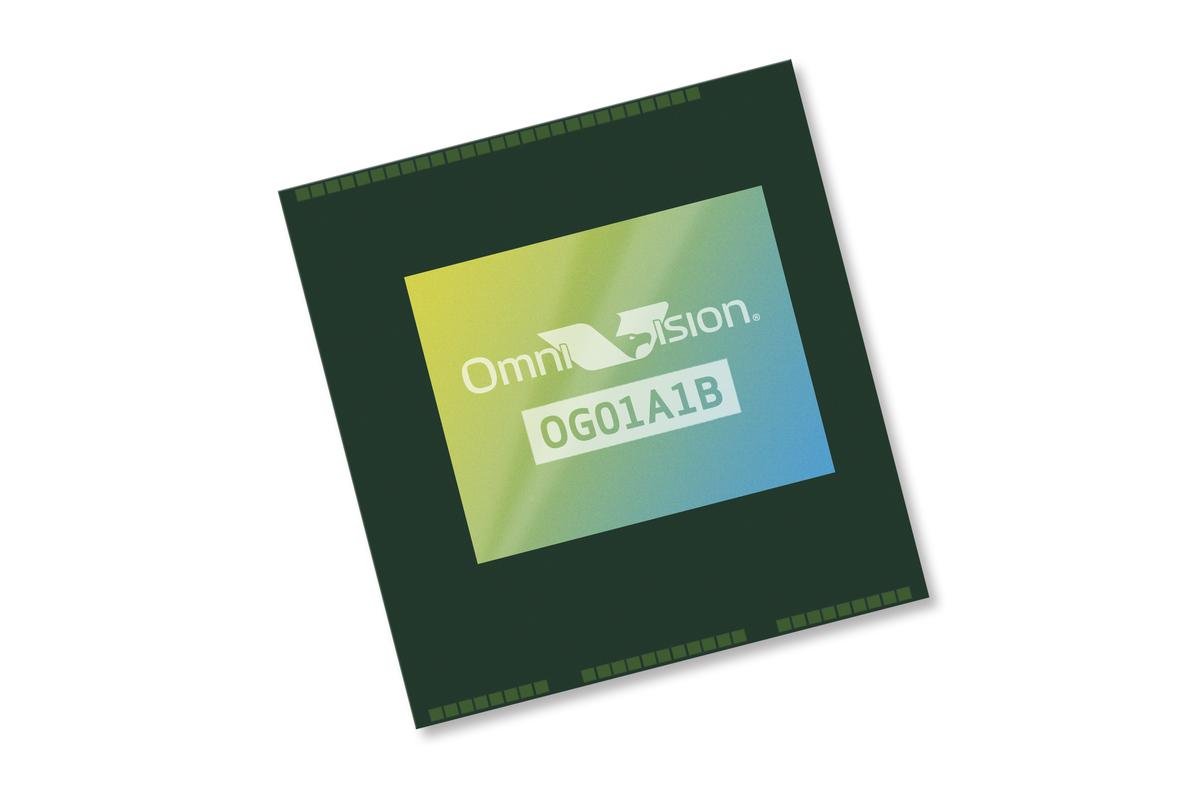
Its OG01A sensor, now sampling, combines PureCel Plus-S pixel technology and Nyxel near-infrared (NIR) technology to enable optimal performance
Its OG01A sensor, now sampling, combines PureCel Plus-S pixel technology and Nyxel near-infrared (NIR) technology to enable optimal performance and precision with NIR quantum efficiency (QE).
This sensor is suitable for a wide range of consumer and industrial applications that need a global shutter to avoid motion blur, along with top NIR performance for low- and no-light conditions.
The OG01A is well-suited to multiple machine-vision applications, including AR/VR headsets, drones, robots, and simultaneous localization and mapping (SLAM), as well as facial authentication in smartphones and other consumer electronics.
This technology is also suitable for automotive in-cabin driver state monitoring and eye tracking.
The 1 megapixel OG01A image sensor provides 1280×1024 resolution at 120 frames per second (fps) and 640×480 resolution at 240 fps in a compact 1/5 inch optical format. High shutter efficiency allows for cleaner motion capture and a high dynamic range. The sensor’s low-light sensitivity has lower gain than the typical 3.0 micron pixel size for an improved signal-to-noise ratio.
The sensor’s high modulation transfer function (MTF) enables sharper images with greater contrast and more detail, which is especially important for enhancing decision-making processes in machine vision applications.
The OG01A also has a QE of 40% at 940nm and 60% at 850nm which enables the sensor to see farther and better in low- and no-light conditions, which allows designers to use less IR LED light and achieve lower system-level power consumption.
For AR/VR headsets, this reduces heat generation. For industrial and robotics applications, designers can use fewer IR LEDs for lower system cost, or use the same number of IR LEDs to achieve a greater image detection range.</

COMMENTS