


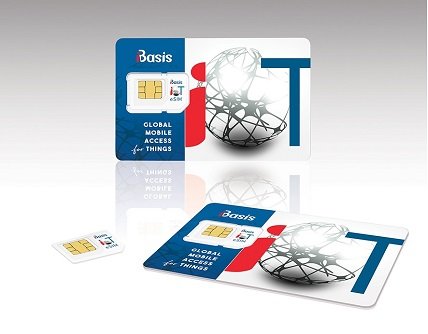
eSIMs address the inherent drawbacks of conventional SIM cards and encourage rapid, out-of-the-box scaling of the IoT A key advantage of cellular
eSIMs address the inherent drawbacks of conventional SIM cards and encourage rapid, out-of-the-box scaling of the IoT
A key advantage of cellular IoT is that the infrastructure to support global deployment is already in place. The installed cellular network comprises robust, proven network technology that covers most of the populated regions of the globe. Because cellular spectrum allocations are licensed and regulated, devices must be identified and authorized before accessing these networks. Most mobiles use a Subscriber Identity Module (SIM) for this purpose. SIMs were originally developed by the European Telecommunications Standards Institute (ETSI) for GSM networks. Today, SIMs are used by almost all mobile devices that connect to LTE (4G) networks. Future cellular IoT devices will also require identification and authorization, but alternative technology is required because the conventional physical SIM is not a practical solution for billions of remotely deployed devices.
SIMPLE CONNECTION
A SIM securely stores an International Mobile Subscriber Identity (IMSI) number, a 15-digit code uniquely identifying the card (and mobile) on the operator’s network. SIMs are typically associated with the company that issued the card and that operator deals with the access request even if the user wants to use a different operator’s network in, for example, another country.
When network access is requested, the IMSI and a onetime-use 128-bit authentication key (Ki) are relayed to the network for operator verification; the operator then authorizes the connection.
There are two major disadvantages of this system for cellular IoT deployment. The first occurs because conventional SIMs are discrete cards that plug in to the mobile device; that means they take up space, the mobile device needs a port (increasing costs and providing an ingress for dust and water), and if a SIM upgrade is required each card must be replaced – something that’s hardly practical for potentially millions of devices, many of which will be in inaccessible locations.
The second problem arises because of the SIM’s association with a single operator: While a SIM covered by a roaming contract can theoretically provide near global coverage by accessing local networks, the actual coverage depends on the number of roaming relationships the “home” operator has negotiated.
It also means paying the high data charges incurred while roaming. Because it stores only a single set of operator credentials, a conventional SIM becomes impractical for a cellular IoT device that is required to operate anywhere in the world. For example, in some regions, permanent roaming authorized by a remote operator is not allowed under local regulations, limiting the cellular IoT device’s usefulness.

COMMENTS